DIAGNOSIS
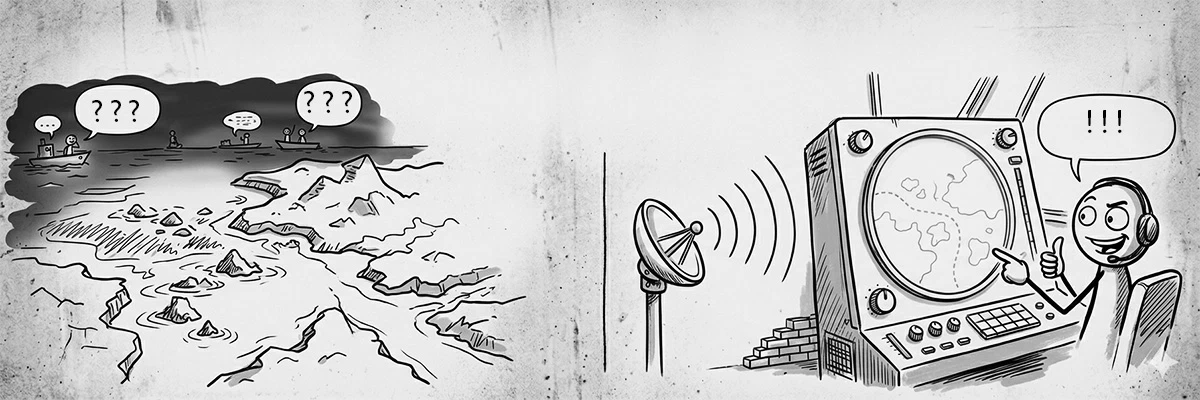
Feedback is one of the most sought, most dreaded, and most frequently ignored forces in business. At its core, feedback is awareness. Think of it as a radar. A radar transmits a signal, receives the echo, and uses that returning signal to determine position, distance, direction, and speed. Without the returning echo, movement becomes blind. Organisations are no different.
Every initiative, campaign, product launch, restructuring, or strategic pivot sends signals into the market and into the organisation itself. What comes back from customers, partners, employees, and the market is not noise. It is the echo that tells the business where it actually stands. And this is why feedback is essential.
It tells an organisation whether it is moving in the right direction, at the right speed, and whether it is reaching the milestones it believes it is hitting. In systems terms, this is a feedback loop: outputs returning as inputs, allowing the system to regulate itself and adapt. Without that loop, action becomes linear. The organisation moves, but it no longer knows where it is. This is where businesses begin to drift.
The failure of feedback loops rarely begins with absence of information. More often, it begins with distortion. The signal exists. Customers complain. Employees notice friction. Partners hesitate. Field teams see a different reality. But as this signal moves upward through the organisation, it is often filtered, simplified, or softened. Middle layers compress nuance to save time, reduce complexity, and, often unconsciously, protect the top layer from operational noise. Leadership, focused on market share, total sales volume, growth, and other strategic indicators, increasingly relies on dashboards and abstractions. At this point the dashboard risks becoming the reality.
The most dangerous moment is when the representation replaces the signal itself.
Qualitative feedback takes time. It requires interpretation, verification, and contextual review. It can be controversial. It can challenge assumptions. It rarely fits neatly into a dashboard tile or an upward-looking chart.
Numbers are easier. Businesses love KPIs. Absolute figures. Percentages. Growth curves. Quantitative data is clean, fast, and easy to present in a boardroom. But beneath those figures the system may already be beginning to rot.
The signs are often present in reports, field observations, and circumstantial evidence, but they become buried under the comfort of positive trend lines. This is where the first visible crack often appears: two versions of reality.
One version lives in the reports. The other lives in the field.
When these two begin to diverge, the feedback loop is already under stress. A common early warning sign is the emergence of contradictory realities. On paper, performance appears healthy. Reports remain positive, budgets continue to be allocated, and dashboards show steady progress. At the same time, independent signals begin to suggest something different. Field teams report weaker execution. Customers experience friction. Partners become less responsive. Frontline observations no longer match the official narrative. This is often the first visible sign that the feedback loop is degrading.
The danger deepens when these signals are dismissed as isolated incidents, operational noise, or issues “not material enough” for leadership attention. At that point the organisation is no longer lacking information. It is selectively trusting the information that supports the existing story. That is how systems begin to lose contact with reality.
Another, often quieter, indication is silence. Clients stop complaining. No formal feedback arrives. No objections are raised. And then, suddenly, they leave.
Silence is often interpreted as stability. In reality, it may be the final signal before disengagement. The strongest organisations do not merely collect data, hey preserve signal fidelity. They create channels through which difficult, qualitative, and inconvenient feedback can travel without being filtered into irrelevance. Because a system without feedback does not improve. It drifts.
And once the dashboard becomes more trusted than reality itself, the drift becomes strategic.